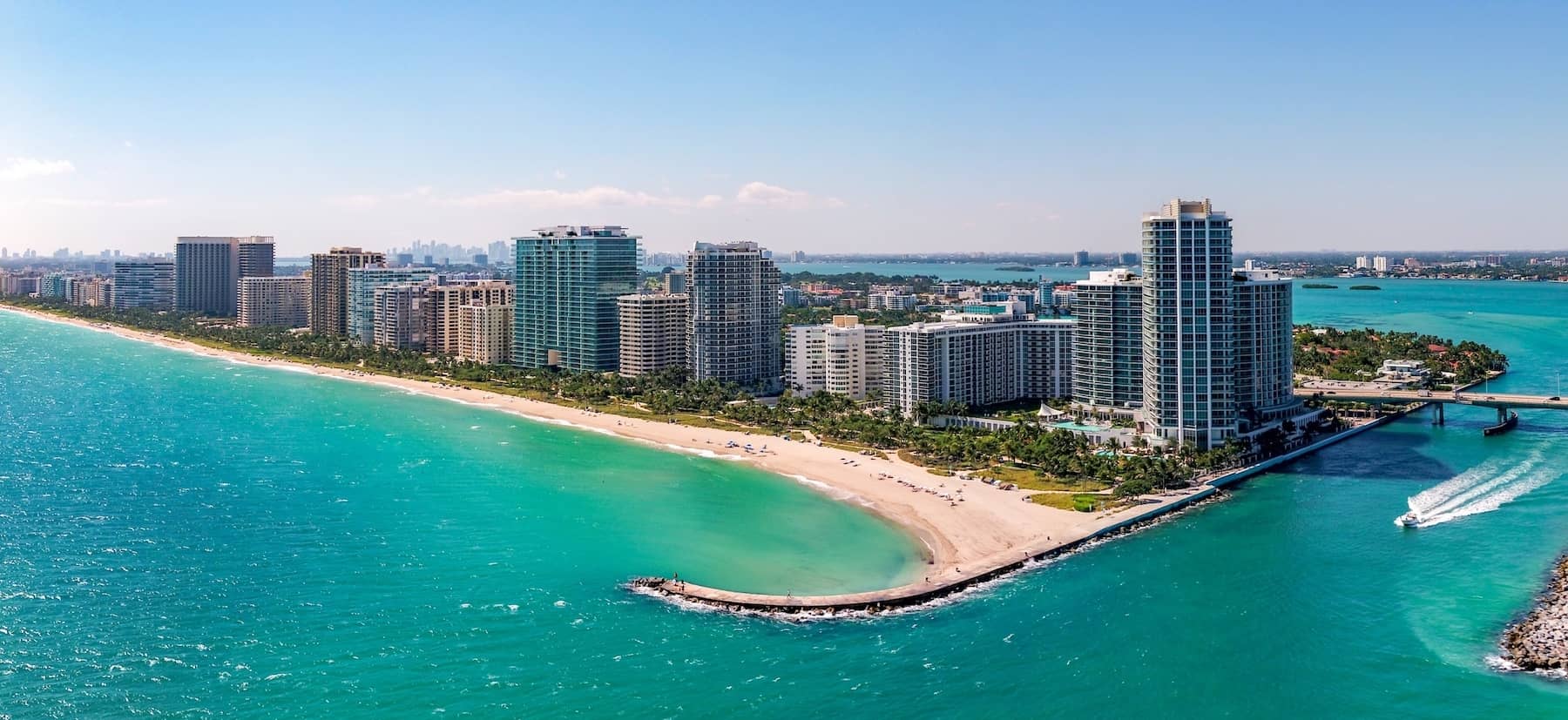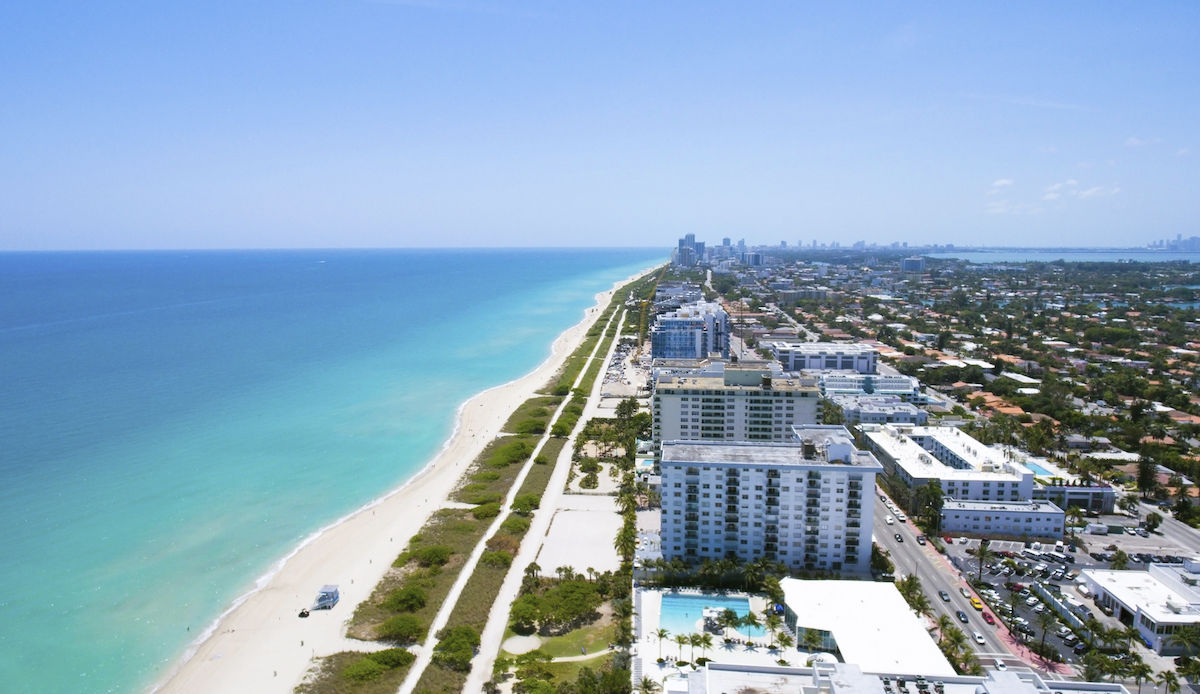
Sunny Isles Beach packs one of the densest concentrations of high-rise condo towers in the country onto a barrier island roughly a half mile wide, most of it built since the 1990s with heavy international ownership. A 1031 buyer here is underwriting a skyline product that doesn't exist in most other Miami-Dade submarkets.
A Skyline Built on a Half-Mile of Sand
Collins Avenue is the spine, with towers rising directly along it and A1A carrying beach and intracoastal traffic. Because the buildable land here is so limited, almost every commercial or income opportunity comes packaged inside a residential or hospitality tower rather than as a standalone building, which changes how due diligence has to work compared to a market with freestanding retail or office product.
Condo-Hotel Product Most Markets Don't Have
The asset types here are concentrated but distinct:
- rental condominium units in high-rise towers
- condo-hotel units tied to a branded rental program
- commercial condo units at tower ground level
- coastal retail bays serving tower residents and tourists
- professional and medical office suites inside mixed-use towers
Condo-hotel product in particular runs on a different lease and management structure than a standard rental unit, often bundling the unit with a mandatory rental management agreement, which needs to be reviewed as carefully as the real estate itself.
International Capital Changes the Comparable Set
Heavy foreign ownership here means unit sales and rental pricing can move on international capital flows and currency conditions as much as on local Miami-Dade fundamentals, which is worth remembering when pulling comparables. A tower that looks fully priced against local rent growth alone may still be trading on demand from buyers evaluating it against other global markets.
Recertification and Reserve Funding on Towers Built in the 1990s
Florida's post-Surfside milestone inspection law applies here too, and towers built in the 1990s are now old enough to be entering their first 30-year structural inspection cycle. Reserve funding that used to be optional for many associations is no longer waivable, which is changing monthly assessments on some buildings faster than owners expected.
For a 1031 buyer, that means pulling the association's most recent milestone inspection report and reserve study alongside the standard rent roll and T-12, the same way you'd pull a building's mechanical service history before signing off on an acquisition. An association behind on funding can mean a special assessment landing on the new owner shortly after closing.
Several of the older motels that once lined this stretch of Collins Avenue have been replaced by the towers standing today, and a handful of surviving low-rise properties from that era still sit between newer high-rises, often carrying very different zoning entitlements and redevelopment potential than their neighbors. A buyer evaluating one of these older parcels should confirm its actual entitlement and air-rights position rather than assuming it will redevelop the same way the tower next door did.
Beach renourishment and dune maintenance along this stretch of coastline are managed at the county and state level, and a property's proximity to an active renourishment project can affect both construction noise during the identification period and long-term erosion exposure. Asking about the current renourishment schedule is a reasonable addition to the standard coastal diligence list here, alongside flood zone and insurance review.
Valet and self-park garage capacity is worth checking directly on any tower with ground-floor commercial space, since many of these buildings were designed around resident and hotel guest parking first, leaving limited dedicated spaces for retail or office visitors. A commercial condo unit that looks attractive on paper can underperform if customers can't reasonably park nearby.
Turn Sunny Isles Beach Into a Practical Sale Plan
Bring the current property, ownership, expected closing date, estimated equity, debt payoff, management goal, and preferred replacement profile to the first conversation about sunny isles beach. Those facts make it easier to separate realistic direct-property, net-lease, and DST paths, surface advisor questions early, and keep credible backup choices visible before the exchange deadline. Free guidance is available whether the sale is still being considered or the property is already under contract.
Common 1031 Exchange Questions
What makes condo-hotel product here different from a standard rental condominium for underwriting purposes?
Condo-hotel units are typically bundled with a mandatory rental management agreement tied to a branded operator, which affects both income and how much control an owner has over the unit. That agreement should be reviewed in full during due diligence, not assumed to work like a standard lease.
Does heavy foreign ownership affect how comparable sales should be read in this submarket?
It can, since pricing sometimes reflects international capital flows and currency conditions rather than purely local rent fundamentals. A buyer should treat comparables here with some caution rather than assuming they track local market trends exactly.
Are 1990s-era towers here subject to the same milestone inspection rules as older buildings?
Yes, Florida's milestone inspection law applies to buildings three stories and up at 30 years old and every decade after, and many towers built in the 1990s are now reaching that first inspection cycle. Reserve funding requirements have also tightened, which can affect monthly assessments.
Should a 1031 buyer request a special assessment history before identifying a condo unit here?
Yes, along with the current reserve study and milestone inspection status, since an association behind on funding may issue a special assessment shortly after a sale closes. That request should go out as soon as a property is under serious consideration, not after closing.
Can inland Aventura or North Miami properties serve as backups if coastal inventory here is limited?
Many buyers do build in an inland backup for exactly that reason, since coastal towers can face slower association approval processes and tighter inventory than nearby inland submarkets. Holding a verified backup protects the 45-day identification deadline if a coastal deal slows down.