A cap rate is a property's net operating income divided by its purchase price, expressed as a percentage. Buy a property for a million dollars that generates sixty thousand dollars a year in net operating income, and the cap rate is six percent. It is one of the fastest ways to compare properties on paper, and one of the easiest metrics to misuse, because a single number hides almost everything about why that number is what it is.
Two properties with an identical six percent cap rate can carry completely different risk profiles depending on the tenant, the lease structure, the building's age, and the market they sit in. The cap rate tells you the price of the income stream, not the quality of it.
Net Operating Income Is Where the Manipulation Happens
Net operating income should equal actual rental income minus actual operating expenses, before debt service and before capital expenditures. Sellers sometimes present a pro forma NOI based on projected rent increases or reduced vacancy rather than trailing actual performance, which inflates the implied value of the property at a given cap rate. Always ask for trailing twelve-month financials, not a forward-looking projection, and confirm which expenses were actually included, since excluding a reserve for capital repairs or a management fee that a new owner would actually pay is a common way to make NOI look better than it will be in practice.
Lower Cap Rate Does Not Mean Worse Deal
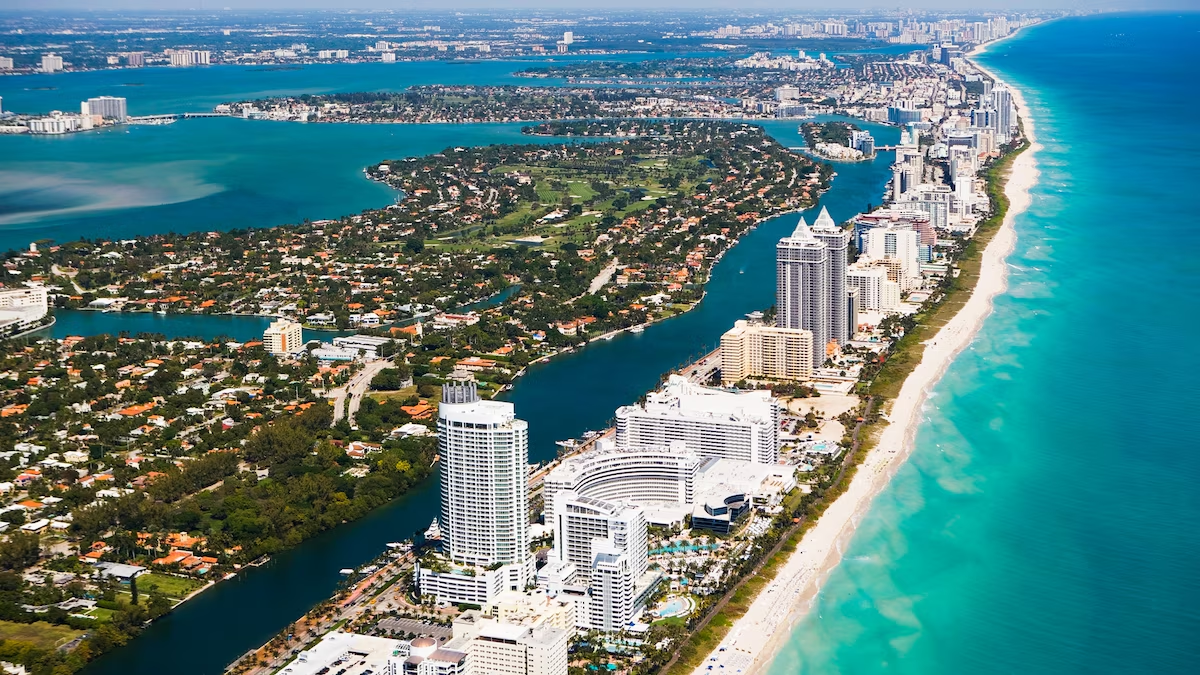
A lower cap rate usually reflects a market's perception of lower risk and stronger long-term demand, which is why prime Miami retail or a newer multifamily asset in a strong submarket often trades at a lower cap rate than a similar property in a weaker location. Buyers new to the metric sometimes assume a higher cap rate always means a better return, when it more often means the market is pricing in more risk, whether that is tenant credit quality, deferred maintenance, a shorter remaining lease term, or a less desirable location.
Cap Rate Ignores Financing Entirely
Because cap rate is calculated on an all-cash basis, it says nothing about your actual cash-on-cash return once a mortgage is involved. A property with a five percent cap rate financed at a four percent interest rate produces positive leverage and a cash-on-cash return above five percent, while the same property financed at a seven percent rate produces negative leverage and a return below the cap rate. Comparing cap rates across properties is useful, but it should never substitute for running your own levered return numbers before committing.
Cap Rates Move With Interest Rates and Market Sentiment
Cap rates are not fixed to a property, they compress and expand with broader capital market conditions, generally rising when interest rates rise and buyers demand more income relative to price, and compressing when capital is cheap and competition for deals is fierce. A property bought at a five percent cap rate in a low-rate environment can lose value on paper years later even with flat or rising NOI, simply because market cap rates expanded in the meantime, which is a real risk for any buyer underwriting a long hold on today's pricing.
Why This Metric Matters More During a 1031 Exchange
Someone identifying replacement property inside a 1031 exchange's 45-day window does not have the luxury of unlimited time to underwrite a deal, which makes a clear-eyed read of cap rate even more important, not less. A seller moving proceeds from a Miami property with a strong location and a low cap rate into a replacement property advertised at a much higher cap rate should ask what risk is being priced into that spread before assuming it is simply a better deal, since a rushed exchange under deadline pressure is exactly when an inflated pro forma cap rate does the most damage.
Common 1031 Exchange Questions
What is a good cap rate for real estate?
It depends entirely on the market and property type. A stabilized multifamily property in a strong metro might trade at a four to six percent cap rate, while a riskier asset class or weaker market could trade at eight percent or higher.
Does a higher cap rate always mean a better investment?
No. A higher cap rate usually signals the market is pricing in more risk, whether from tenant quality, location, lease term, or deferred maintenance, not simply a better bargain.
How is cap rate different from cash-on-cash return?
Cap rate is calculated on an all-cash basis and ignores financing. Cash-on-cash return accounts for your actual mortgage payments, which can be higher or lower than the cap rate depending on your interest rate and loan terms.
Should you trust the cap rate a seller advertises?
Verify it independently using trailing twelve-month actual income and expenses rather than the seller's pro forma projection, and confirm which expenses were included in the NOI calculation.
Why does cap rate matter more when identifying 1031 replacement property?
The 45-day identification window limits how much time you have to underwrite a deal, so understanding what a property's cap rate is actually pricing in helps avoid overpaying under time pressure.